

Category Archives: Resources

The Real Cost of Fake and Clone Cables

Selecting Cable Assemblies for Space Applications

Tony Fedor & Kevin Moyher from Times Microwave Systems Talk about their LMR cable on its 30th Anniversary
Choosing the Right Coaxial Cable for RF/Microwave Ablation

Deep Space

Space Launch

Spaceflight Test

Communication

Space Orbits
RF Cable Assemblies for Commercial Space Applications

Sustainment: A critical component of military avionics development

Greater Challenges and Opportunities Will Drive Our Industry in 2023
Ensuring Nonmagnetic Coax for MRI Applications
How to ensure coaxial cables and connectors for critical MRI applications are truly nonmagnetic
As magnetic resonance imaging scanner fields get stronger, materials, processes and testing are crucial for nonmagnetic interconnects.
By Kai Loh, Times Microwave Systems®
Originally published with Medical Design & Outsourcing
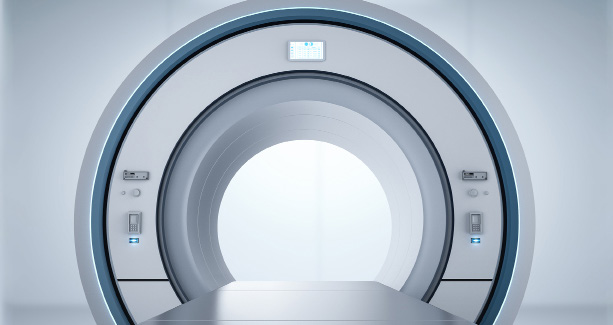
Magnetic resonance imaging (MRI) uses powerful magnets and radio waves to generate images of the body’s internal structures. The strength of the magnetic field in MRI machines is one of the primary factors in determining the quality of the images produced. Currently, most MRI machines have a magnetic field strength between 1.5 Tesla (T) and 3T. However, there are now scanners approved for clinical use that go up to 7T and experimental systems that reach up to 11.7T.
MRI machines rely on extensive arrays of radio frequency (RF) interconnects — coaxial cables and connectors — to send and receive the pulsed RF signals used to image patients. It is critical these components be nonmagnetic, as MRI machines rely on the precise and accurate alignment of magnetic fields to produce high-quality images. The presence of any magnetic material can interfere with the process and result in reduced accuracy, distorted images, and potentially even harm to patients.
The term “nonmagnetic” is often used with respect to coaxial cable assemblies. The differences in magnetic properties among common materials used in RF interconnects can be subtle but significant in their impact, especially in potentially life-critical applications such as MRI machines. Therefore, careful consideration must be paid to the base materials used, material processing, component finishing, and testing of completed coaxial cable assemblies to ensure no magnetic properties are inadvertently introduced.
Material selection
Although RF interconnects such as coaxial cables and connectors are integral to MRI systems, their potential to introduce magnetic materials can be easily overlooked. Therefore, when selecting coaxial cables for MRI machines, it is vital to consider the base material and to what degree it can be magnetized. For example, ferrous materials such as iron and most types of steels should be avoided. Alternatively, nonmagnetic materials such as copper, brass, beryllium copper, aluminum alloys, and austenitic stainless steels are proven solutions in many applications.
The connectors used in MRI coaxial cable assemblies should also be made of nonmagnetic materials and designed to minimize the magnetic field they generate. It is not uncommon for many cable assembly suppliers to use components from various sources. Key components are constructed from a number of intricate piece parts often fabricated by different vendors. Without comprehensive control or a vertically integrated manufacturing environment, it can be challenging for a supplier to effectively meet the critical nonmagnetic requirement for MRI machines.
Processing and surface finishing
Even with careful selection of base materials and control of manufacturing processes, the extrusion process and machining of materials can introduce elements that may change magnetic properties, especially on a production line that handles a variety of materials.
Even nonmagnetic stainless steel can become magnetic after it has been machined into a connector. It is crucial to ensure the process is carefully regulated.
The finishing of components is also an essential consideration, as a nonmagnetic substrate can become magnetic if plated with the wrong material. For example, using a small amount of silver plating over a nonmagnetic substrate would typically produce an end product considered nonmagnetic.
However, with the increasing field strength of modern MRI machines, even a micro-inches-thick amount of magnetic material becomes increasingly relevant. Therefore, it is critical to carefully select and clearly specify material for each layer of the plating stack-up.
Testing
Testing and validating the finished materials used for coaxial cables and connectors to confirm they are nonmagnetic is essential. Use an in-depth test process aligned with industry standards such as ASTM F2052 or ASTM F221 to ensure the components are nonmagnetic. These standards define the requirements for materials, magnetic properties, and performance.
This can be done using a Gauss meter or a magnetometer, two tools that measure the strength and direction of magnetic fields. The cables and connectors should be tested in their final configuration, including any adapters or extensions. Thorough testing of the materials and final products can ensure they will not interfere with the MRI imaging process.
Finding the right partner
Given the life-saving diagnostics provided by MRI, it is imperative to choose a partner with a proven track record of developing solutions for mission-critical applications such as the military, spaceflight and aerospace industries. The partner should be able to leverage time-tested standards such as quality, cleanliness, and traceability from those industries.
Manufacturers must take these factors seriously and should offer not only materials but also technical expertise to solve complex problems from an industry-standard perspective. A third party that provides engineering services in addition to coaxial cable assemblies can become a part of the design team from the beginning and collaborate on the right interconnect solutions for a specific MRI application.
Whether designing a product or helping with processing and techniques, the partner must be committed to providing technical solutions and answers to deliver high-quality results.
Takeaways
In conclusion, the fundamental requirement to ensure coaxial cables and connectors used in MRI applications are truly nonmagnetic is increasingly important to ensure the images produced are accurate as MRI magnetic fields strengthen.
Careful consideration of the base materials, materials processing, and component finishing ensure coaxial cable assemblies used in critical MRI applications remain nonmagnetic. Once complete, testing the assembled cables and connectors for magnetic fields and verifying compliance with industry standards confirms the assembly will not interfere with the MRI imaging process.
New Connectors Address Design Limitations of the SMP Family

RF Interconnects for High-Performance Quantum Computing
RF Interconnects in Quantum Computing
Understanding the Complex RF Interconnect Requirements for Quantum Computing Technologies
By Dave Slack, Director of Engineering
Originally Published with Microwave Engineering Europe
Quantum computing technology represents the next frontier of computation based on the laws of quantum mechanics. The primary use cases today involve scenarios consisting of a complex problem with many thousands of inputs for applications, including cybersecurity, economic and financial modeling, thermodynamic and aerodynamic modeling, cosmology simulation, and more.
In quantum computing, information is processed using quantum bits, or qubits, instead of classical bits. Unlike the bits that power a classical computing machine, which can only exist in either 0 or 1 state, qubits can exist in multiple states simultaneously, making quantum computers much faster at certain types of computations. This enables quantum computers to efficiently solve complex problems that classical computers cannot solve, saving years of development time and substantial money in engineering design.
Qubits and microwave resonant circuits act similarly; they can be driven from a zero to one state with a microwave signal. Under this condition, the possibility of existing in a one or a zero state varies sinusoidally with time. Like other signals, qubits have a magnitude and phase relationship. In quantum computing, one of the limiting factors is that when the resonator is under this driven condition, it can only be predictable and controlled for a particular time period.
This is due to effects that cause it to lose energy and stop resonating. The limiters are known as the correlation of the qubit. When qubits become de-correlated and are no longer predictable and controlled, it creates computational issues analogous to bit errors in data.
Microwave hardware can feed these resonators and minimize contaminations. In fact, one of the prime limitations is ultra-low noise driving signals for qubits, especially low-phase noise, so a great deal of work has been done in the applications of ultra-low phase noise oscillators and similar technologies. When multiple bits are present, they can be coupled and controlled by driving a signal at a microwave frequency. It can be amplitude and phase modulated to give it specific properties. Aside from the low noise sources of these driving signals in precise modulation schemes, the hardware minimizes that contamination.
The Complexities of Quantum Computing Require Specialized RF and Microwave Cable Assemblies
Quantum states are fragile and must be maintained to prevent qubits from de-correlating. As a result, the correlation and control of qubits are fundamental issues to address in the technology’s development. It boils down to the fact that RF “noise” is introduced from thermal, magnetic, and mechanical sources.
High-performance coaxial cable assemblies (which include both the cable and connectors) are crucial in delivering precise, high-frequency microwave signals to the qubits to change their state and perform operations. Using coaxial cable assemblies in quantum computing also helps mitigate the effects of environmental noise and other sources of signal degradation, allowing for more reliable and precise quantum operations.
These assemblies must meet several requirements to deliver precise and stable signals for controlling qubits, including:
- Low Loss: Low loss is necessary to minimize signal degradation and ensure high-quality signals reach the qubits.
- Low noise: “Noise” means qubits lose their property of superposition, which prevents the quantum computer from working. Therefore, cable assemblies must be shielded to prevent interference and avoid disrupting the quantum information stored in the qubits.
- Stability in Extreme Temperatures: The cable assemblies must maintain stable electrical properties over a wide temperature range to ensure consistent performance in challenging environments.
- High-Frequency Range: The cable assemblies must be capable of operating at high frequencies, typically in the range of several GHz, to enable fast and accurate control of the qubits.
- Immunity to Magnetic Interference: The systems must be immune to electromagnetic interference from other sources to prevent errors in quantum computation.
Low Loss, Low Noise
Successfully achieving low loss and noise comes down to material choices and construction methods. These options will be detailed in the following sections.
Extreme Temperature Conditions
One of the essential requirements for preventing interference is to operate in very low temperatures. Quantum computers must be exceptionally cold to be stable—typically colder than the vacuum of space—with temperatures down to -460 degrees Fahrenheit.
RF cables constructed using a silicon dioxide (SiO2) dielectric are used throughout the microelectronics industry for their exceptional insulating properties and to offer semi-rigid, highly temperature- and radiation-resistant cable solutions. Using the development techniques for creating SiO2 cables and harsh environment aspects as a launch point, the next logical step is to apply materials that are more advantageous to quantum computing applications.
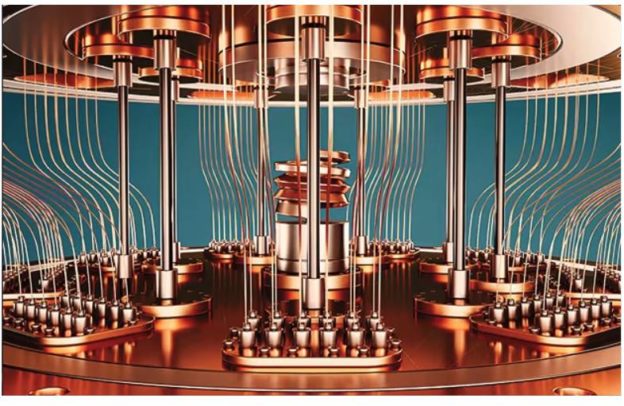
RF cable assemblies are used throughout the entire system, starting at the bottom level where the quantum processor (QPU) is located through different temperature levels and out of the chamber to the control electronics. Two material types fit into this space well and are used at different temperature levels: a 4K down to 4mK NbTi construction, which is a superconducting cable designed to interface directly with the QPU, and a room temp to ~4K CuNi-based semi-rigid construction. Room temperature cables also play a vital role in this operation because phase stability is essential. These cables generally have varying lengths associated with them and cannot introduce any errors in the systems.
Smaller Spaces, Higher Frequencies
Technological advances across quantum computing are leading to more complicated requirements for RF systems that must accommodate higher frequencies inside devices that are constantly getting smaller.
For example, quantum computing requires signal access points close to processors.
Cabling is a challenge because in tight space configurations, traditional semi-rigid solutions have limitations; in very small sizes, they become fragile, making installation difficult as these assemblies are more prone to breakage. Using flexible cables specifically designed to optimize space, bending around tight corners, and connecting to various ports without wasted cable length is quickly becoming the preferred option. Durability and material selection are additional considerations as these cables are twisted around in tiny spaces in the challenging environments of quantum computers.
Reducing Magnetic Interference
Quantum computers transmit RF signals within a magnetic field. Non-magnetic coaxial cables are therefore required in critical areas of the signal path as the presence of any magnetic material in these components may cause interference.
As a result, a non-magnetic or non-metal coaxial cable or connector must be “invisible” to the magnetic field, which requires very low susceptibility and no field distortion. A class of hermetically sealed custom coaxial cabling assemblies addresses this by utilizing advanced manufacturing techniques that ensure zero electric field distortion.
Conclusion
Quantum technology is ushering in an era of significant improvements in computing performance. However, the technology is both incredibly promising and highly complex. To help quantum computers perform to their highest potential, unique RF interconnect solutions will be required. As this technology is in its infancy and rapidly developing, technologists should partner with an interconnect specialist with a wealth of experience in creating solutions that have powered the most innovative products to date in the most extreme conditions possible and can innovate as the technology evolves.