
Category Archives: Articles

Emerging Technologies Challenge RF Testing
Rapidly Advancing Technologies Create New Challenges for RF Test and Measurement
Originally Published in Microwave Product Digest
Powering high-performance, ultrareliable RF systems in military electronics
New Connector Design Addresses Significant SMP Shortcomings
New Connector Design Addresses Significant SMP Shortcomings
Originally Published in Connector Supplier
RF cables and connectors for avionics balance size, materials
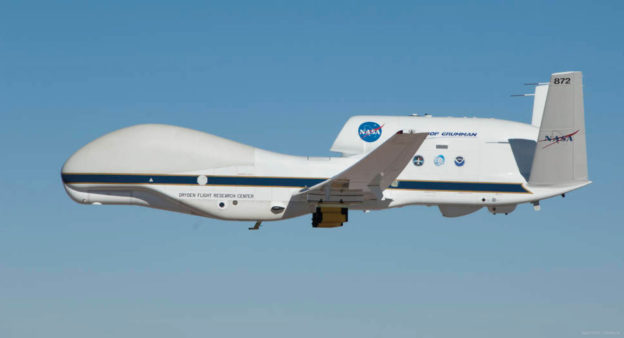
Making Connections in Ruggedized UAVs
Making Connections in Ruggedized UAVs
By Dave Murray
Originally Published in Microwaves&RF
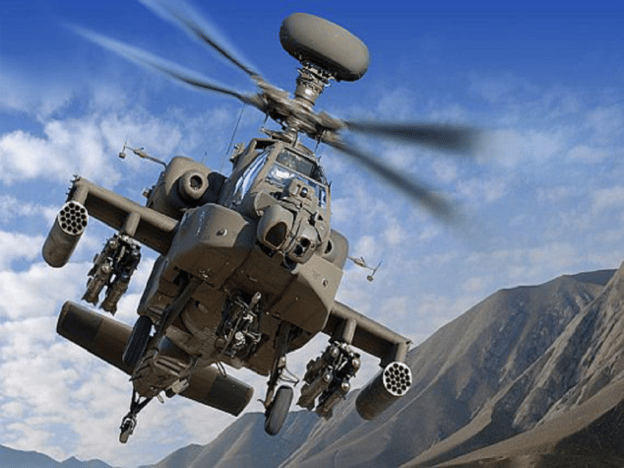
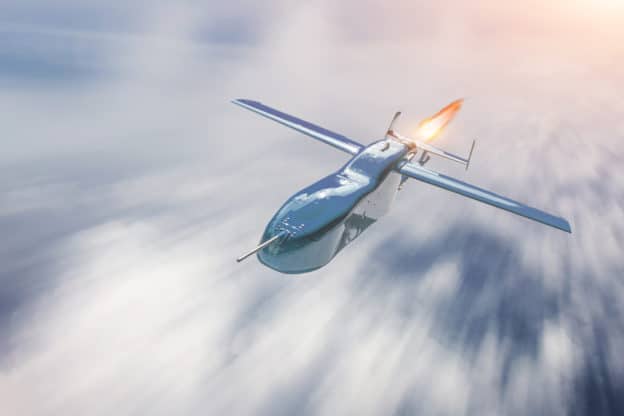
Military unmanned aerial vehicles (UAVs) are growing in numbers and complexity, taking on more advanced payloads with multiple sensors. Modern battlefield UAVs do everything that human-piloted air vehicles and their avionics systems once did, including electronic warfare (EW), signal intelligence (SIGINT), and surveillance, often flying at high altitudes and high speeds. Many military UAVs are designed with modular configurations to install different subsystems for each mission to optimize results.
Whether in standard or modular formats, military UAVs rely strongly on their RF/microwave interconnections to keep all systems linked, including from the UAV to the ground through demanding operating conditions. Specifying RF connectors, cables, and cable assemblies for military UAVs, especially as they increase their use of mmWave frequencies, requires an intelligent balance of many factors to keep all systems connected under all conditions.
Military UAVs vary in size and complexity according to application and mission, with larger, fixed-wing vehicles flying at higher speeds and altitudes compared to smaller, fixed- and rotary-wing vehicles used at lower altitudes in commercial and industrial applications. One of the better-known high-altitude UAVs, the RQ-4 Global Hawk, has flown at altitudes of 60,000 ft. and higher.
SWaP Considerations for UAV Components
Military requirements for size, weight, and power (SWaP) offer excellent guidance for component selection in UAVs because component weight and power consumption translate to a UAV’s operating range. In addition, components such as cables and connectors must fit into tight spaces and still be accessible for maintenance and measurement purposes.
UAVs contain many electronic parts and subsystems that must be interconnected, such as antennas, data recorders, radars, receivers, and transmitters. The cables and connectors provide the pathways for routing data, signals, and power throughout these subsystems. Any interruption in the pathways can be mission-critical, even fatal.
In general, space for components and payload in a UAV is limited, whether for military, commercial, or industrial use. The cables, connectors, and cable assemblies that provide interconnections within a UAV must meet tight space requirements while maintaining high performance and reliability. These interconnections have to satisfy challenging mechanical and electrical requirements within a UAV capable of enduring severe environmental conditions.
Choosing Cables and Interconnects: Where to Begin?
A practical starting point for sorting through coaxial cable interconnects is determining if they will even fit within the airframe. Smaller cables may fit where space is limited, adding little to the total weight of the UAV, but they may lack the performance to meet the electrical requirements of its electronic systems, so mechanical and electrical needs must be balanced.
Ideally, once installed, coaxial interconnections can be readily accessed for testing and maintenance purposes. UAVs with modular sensor systems will require access to interconnections for different modules used within the airframe.
Cable selection requires a balance of the mechanical, electrical, and environmental requirements for a UAV’s systems. Maximum cable diameter and weight are practical starting points when sorting through available cable solutions. The coaxial cable should exhibit low loss across a frequency range of interest, which will depend on the length and diameter of the cable.
The cable’s insertion loss and return loss (VSWR) also will be affected by the choice of connectors and how well the cable assembly and connectors are constructed. Low loss is particularly important for cable assemblies used at higher frequencies since signal power is limited at mmWave frequencies.
In addition to cable diameter and weight, the flexibility of a coaxial cable assembly is essential when determining whether a particular assembly can fit the needs of a UAV’s interconnections. Interconnect flexibility can be gauged in terms of its minimum bend radius, which is a function of a cable’s construction. Minimum bend radius effectively defines the space required for the smallest change in a cable’s direction.
Weathering High-Stress Conditions
High-frequency interconnect cable assemblies for military UAVs face severe conditions while in flight due to changing weather and stresses caused by high-speed operation. Some UAVs developed for high-altitude operation include hypersonic capabilities with speeds reaching Mach 5 and above. These speeds result in high-temperature environments for the UAV’s electronic components and systems, which must operate reliably at these higher temperatures.
Because the interconnections are such critical components, cables and connectors for military-grade UAVs are designed for operating temperatures as high as +300°C and total operating temperature ranges as wide as −65 to +300°C. Even the 300°C limit is being challenged; thus, Times Microwave Systems® (TMS) has been asked to develop materials for its cables and connectors to handle these new challenges.
RF/microwave interconnections in military UAVs, especially those with phased-array antennas, require high phase stability with temperature. Phase-matched cable assemblies are typically used in antenna systems where phase is used as a beamforming and tuning parameter and in multiple-input/multiple-output (MIMO) antennas that combine the contributions of multiple antennas to send and receive high-frequency signals, often with wide modulation bandwidths.
High-altitude (typically 50,000 ft. or more above sea level) UAVs often operate in conditions that expose their components to near-vacuum environments, resulting in moisture-absorption problems when it returns to sea level. This “water in the cable” affects the interconnect amplitude and phase characteristics of the cable’s conductive metals and dielectric insulators and may result in significant degradation and failure of an electronic systems. As a preventative measure, coaxial cables designed for military UAVs, especially those for high-altitude operation, usually include some form of environmental seal against the effects of vacuum-like environments.
Adding Connectors
The mechanical, electrical, and environmental performance levels achieved by a UAV’s coaxial cables also must include its connectors as they contribute to the SWaP levels. Connectors are typically designed for ease of installation and minimal mechanical and electrical performance degradation. For UAV applications, the high-performance levels must be maintained at high shock and vibration levels.
The quality of a coaxial connector’s machined components, as well as performance and reliability, are impacted by how well the connector is attached to the cable and the effectiveness of its locking mechanism in a mated pair of connectors. Connectors can be soldered or crimped to a cable, with soldering the more labor-intensive approach but providing a robust mechanical attachment with little performance degradation over time. An effective plated finish on a coaxial connector also can contribute to reliable and consistent long-term performance.
Due to the modular architecture of some UAVs, some coaxial connectors must endure many mate-demate cycles for changing of function modules within the UAV. In such cases, a connector’s mate-demate lifetime needs to be evaluated along with its mechanical, electrical, and environmental performance parameters to achieve the best fit within a particular UAV. Oftentimes, high-frequency, high-performance blind-mate connectors are used in UAVs for this purpose.
Seeking Solutions
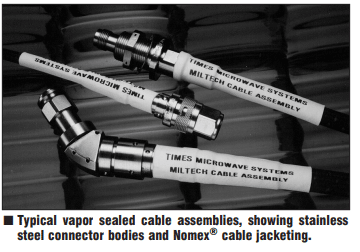
Practical UAV interconnection solutions are typically available as cables or cable assemblies constructed according to precise lengths and designated connectors. For example, TMS’s MILTECH® flexible cable assemblies (Fig. 2) from Times Microwave Systems feature excellent shock and vibration resistance and good phase stability over a wide operating temperature range (−65 to +200°C). They’re manufactured to applicable military standards with tight cable/connector interface control to achieve the hermetic seal needed for high-altitude flight.
The cables are constructed with polytetrafluoroethylene (PTFE) dielectric, a solid silver-plated copper center conductor, and a silver-plated copper shield for protection from electromagnetic interference (EMI). Furthermore, they’re factory-terminated with a variety of coaxial connectors.
To meet the tight space requirements of different UAV systems, MILTECH cables come in various sizes/weights, including 0.130-in. (3.30-mm) diameter cables with 0.650-in. minimum bend radius and 0.175-in. (4.45-mm) diameter cables with 0.875-in. minimum bend radius. The smaller-diameter cables can be terminated with 2.4- or 2.9-mm connectors for use at mmWave frequencies. The cables feature high moisture resistance and vibration resistance according to MIL-STD-202 requirements and high shock resistance per MIL-E-5272 requirements.
For tight UAV fits requiring cables bent close to the connector, TMS’s InstaBend® 047 cable assemblies (Fig. 3) provide low-loss propagation of signals up to 62 GHz in the tightest spaces. To ensure high-quality attachment of connectors to cable, they’re only available as complete assemblies.
An InstaBend 047 cable assembly with an outside diameter of 0.10 in. (2.67 mm) provides a minimum bend radius of 0.3 in. (6.4 mm). Light in weight for UAVs, these cable assemblies weigh only 0.01 lb./ft. (0.02 kg/m) and are available with several different connectors depending on frequency range. They handle temperatures from −60 to +125°C, are shielded to −90 dBc, and rated for voltages to 100 V.
When phase must be tightly controlled, PhaseTrack® cables and cable assemblies developed by Times Microwave Systems are well-suited for that parameter, coming in a variety of diameters with different connectors. A 0.108-in. diameter cable (Fig. 4) features a cutoff frequency of 80 GHz and a minimum bend radius of 0.550 in. The cable is constructed with proprietary TF4® dielectric and doesn’t suffer the phase variations with temperature common to cables with PTFE dielectric.
PhaseTrack cable assemblies fit ground, sea, airborne, and space platforms. They’re available in many versions, including a silicon-dioxide (SiO2) dielectric for applications with temperatures exceeding +1000°C.
Rugged Connectors
Maintaining connections under high shock and vibration levels common to a UAV while being easy to mate requires a coaxial connector with a simple but effective locking mechanism. The TLMP push-on locking connector from Times Microwave Systems (Fig. 5) was designed with the small form factor of the popular SMP push-on connector but with improved mechanical, electrical, and environmental performance.
The TLMP connector, which is usable to 60 GHz, has a unique mechanical design that supports high-pulsed-power, high-voltage applications. Its latching mechanism achieves improved mating retention compared to an SMP connector even in the high shock and vibration environments of military UAVs. The connector’s slots are entirely covered with its mating part for improved EMI and EMC performance compared to an SMP connector. Connections must maintain high EMI and low levels of signal leakage to prevent an adversary from identifying a military drone in flight.
For UAV interconnect applications that don’t require a hermetic seal or enhanced phase stability, Times Microwave Systems’ LMR® and TCA cables and cable assemblies can be practical options. LMR cable assemblies provide flexibility to enable tight fits while LMR LW cables feature an aluminum braid shield for effective shielding in low-weight cable assemblies usable through 8 GHz. TCA cables and connectors have long served commercial avionics systems as flexible interconnect solutions, offering a combination of light weight and durability through 5 GHz and higher.
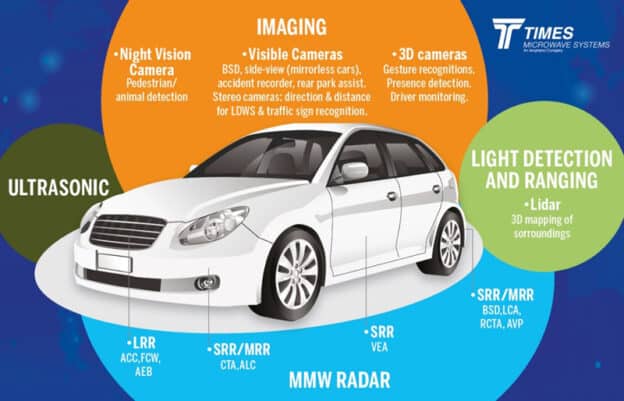
Advancing Automotive Tech Challenges RF Testing
High-Density RF Interconnect Systems

Key Considerations for Coaxial Cables in Space
Key Considerations for Coaxial Cables in Space
Phase Stability
For phase-sensitive systems, compensating for the knee multiple times per orbit as the spacecraft moves through its operating temperature range is challenging and limits overall system performance. Other dielectrics such as Times Microwave’s TF4® dielectric and Sio2™ silicon dioxide materials do not produce a similar non-linear change. In addition to controlling overall phase change vs. temperature, designers may need to characterize the hysteresis of the phase change across the operating temperature range. The silicon dioxide dielectric provides linear phase change with exceptional repeatability for applications requiring low hysteresis.
Return Loss
The second major environmental consideration for spaceflight applications is electrical performance over radiation exposure. Plastics such as PTFE and TF4 will degrade over time, increasing loss. For short-duration or risk-permissive missions, these long-term concerns may not be compelling. For long-duration, high-exposure, or high-reliability missions, using radiation-tolerant coaxial solutions such as the SiO2 line is better than shielding a plastic.
High Density
The high-frequency cables required for spaceflight applications have a shorter range, requiring a dense network of antennas.
Many different requirements may apply in terms of RF and microwave interconnects used with ground-based satellite dishes, such as high-frequency performance, low-attenuation needs, phase stability, and low-PIM performance. Our TCOM®, MaxGain®, and LMR® products are designed to address these needs.
At the same time, technology providers are working on advanced designs that accommodate extremely restricted space constraints and producing spaceflight connectors that successfully operate up to 70 GHz. Our new InstaBend® high-performance microwave assemblies provide a flexible preassembled design for interconnects between RF circuit cards, modules, and enclosure panels, enabling space-efficient implementation for higher frequencies.
The high-performance microwave assemblies are ideal for in-the-box applications because the cable can be bent very closely behind the connector. This minimizes footprint, saves room, and simplifies cable routing, eliminating the need to protect the back of the connector.
Materials
In addition to the issues of smaller cables tightly packed and connected, space applications require materials and constructions that withstand radiation, sandblast storms, extreme temperatures, and pressure variations. The latest materials technology and manufacturing processes are needed.
In the past, semi-rigid cables have been the standard cabling solution in space applications because their solid copper outer conductor protects the dielectric material inside. Today, special semi-rigid cable solutions based on silicon dioxide dielectrics are available. For example, our SiO2 cable assemblies are highly temperature and radiation resistant.
Some antennas fold into the satellite when not in use and unfold upon arrival at the satellite’s destination. There, the antennas will point to other satellites, get a position, and lock mechanically. Flexible cables are needed to work around the elbow that enables the antenna to fold and unfold.
Connectors
New styles of connector interfaces such as Times Microwave’s TLMP address the electrical and mechanical weaknesses of traditional high-frequency SMP/SMPM interfaces for high-vibration spaceflight applications. They visually indicate full engagement by exposing a green ring on the connector body when successfully mated.
Once routed correctly, it is also critical to ensure that the cable is appropriately mated to ensure effective RF performance. For threaded connectors, RF assembly suppliers should be able to provide recommended connector torque values. Designers should also consider multiport connectors that will mate multiple contacts simultaneously, reducing the opportunities for error.
Times Microwave Systems®: The Ideal RF Interconnect Partner for Demanding Space Applications
Qualifications and Heritage
Our team has deep experience in space and other mission-critical industries such as military and defense.
Breadth of Products
Components deployed in space must meet many technical standards. There is, however, no standard for how to apply these materials to construct a consistently reliable RF solution. That is where our expertise and access to a full range of product options are needed. You can select the suitable material and choose from multiple cable constructions, various connector designs, and assembly techniques, all from the same supplier.
Dedicated Technical Experts
The complexity of space applications requires an effective partner who will work collaboratively to extend your design team. We help our partners understand the electrical and mechanical trade-offs particular to their unique space applications. Our technical team asks the right questions and listens to understand your unique needs, always considering innovative solutions.
Achieving High Density in Mission-Critical Circuits
Achieving High Density in Mission-Critical Circuits
By David Kiesling
Originally published in Microwave Journal
Technology providers are creating advanced new wireless system designs within restricted space constraints in avionics, 5G, space and many other industries. These applications rely on high density RF interconnections capable of high signal integrity and reliability in ever more miniature housings. There are many challenges to providing practical RF interconnections in such dense housing environments. Fortunately, innovations in RF interconnections have led to reliable, high performance solutions that can fit the tightest spaces available, even at the most difficult interconnection angles.
AVIONICS
Avionics applications have limited space as they accommodate more application needs throughout the airframe. In the past, it may have been common to have 12 antennas on an aircraft, but there are now 50—even hundreds in some cases—antennas serving advanced avionics systems. More antennas in aircraft environments leads to more signal paths and the need for more RF interconnect solutions to accommodate them.
5G
As more users rely on 5G services, more antennas will be needed to provide coverage, both at lower FR1 frequencies (under 6 GHz) and at higher FR2 mmWave frequencies. Antenna densification is required to deliver increased peak data speeds, ultra-low latency, enhanced reliability, enormous network capacity and increased availability for 5G. Many 5G networks employ MIMO antennas, which are shrinking in size as higher frequency bands are used to accommodate larger bandwidth requirements. This translates into more antennas in smaller spaces and more RF interconnections within those smaller spaces.
5G small cells, such as micro, pico and femto cells, are examples of the electronic densification within 5G networks as they are spaced much closer than traditional wireless macrocell towers, often only 100 yards apart. Demand for high density cabling solutions to accommodate the necessary
connections in smaller, more compact installations will continue to grow.
SPACE
Equipment used to support space technology must be lightweight, compact, reliable and capable of withstanding high levels of shock, vibration and radiation, as well as wide temperature ranges. RF coaxial cable assemblies must be designed to perform reliably in the smallest possible footprint. The high frequency cables required for space applications must support low loss communications, requiring a dense network of antennas.
HIGH DENSITY INNOVATIONS ABOUND
High density RF interconnection solutions have evolved from individual assemblies with multiple coaxial connectors to a single connection port. There are a wide variety of unique high density options suited to fit the specific needs of an industry/application, including multiport and mini-multiport connectors, bundled cable assemblies, locking miniature blind mate connectors and cable assemblies for densely packed in-the-box applications. Common requirements for these environments include ease of installation, high vibration (cannot come apart) and environmental seals.
MULTIPORT AND MINI-MULTIPORT CONNECTORS
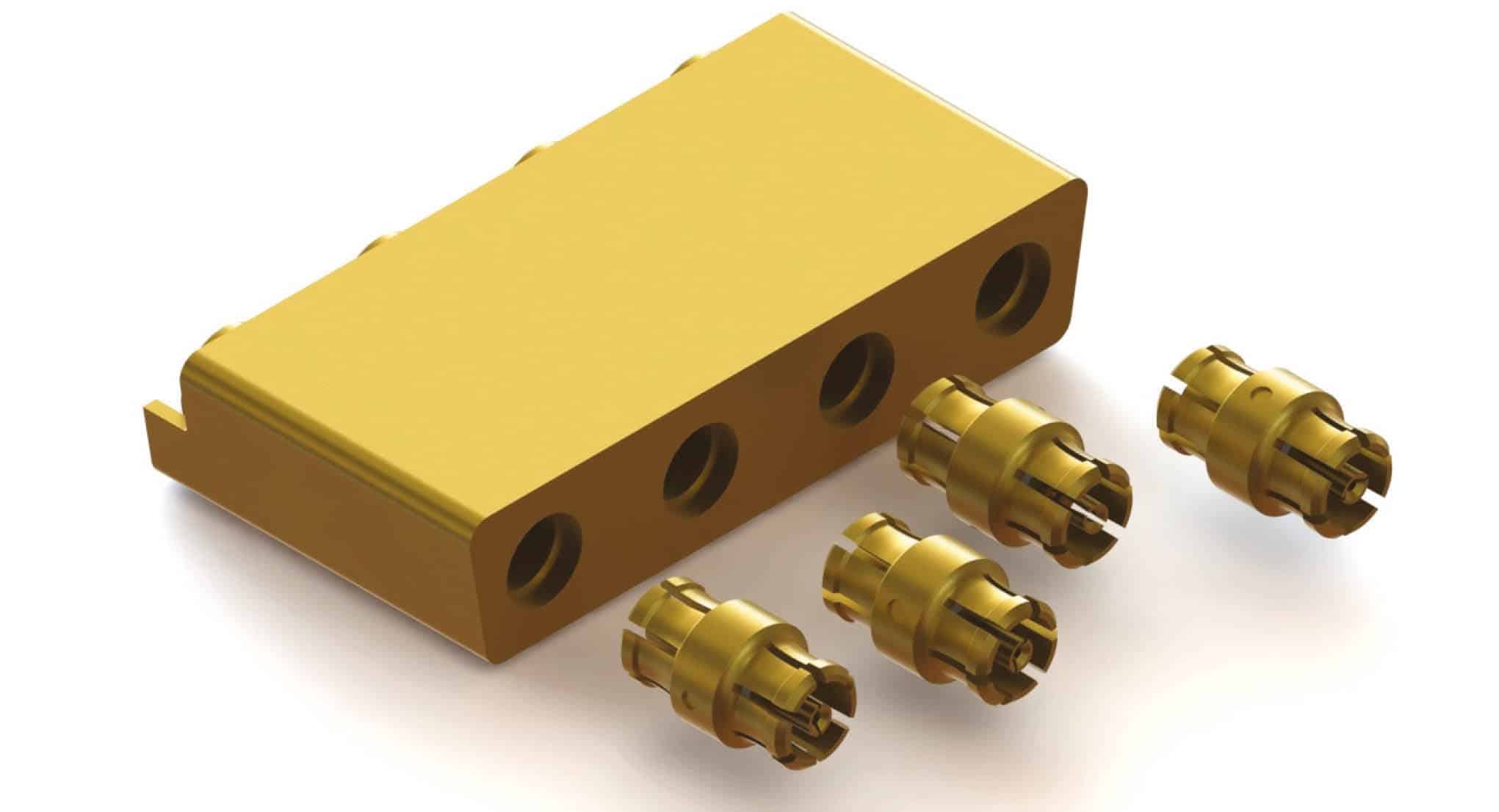
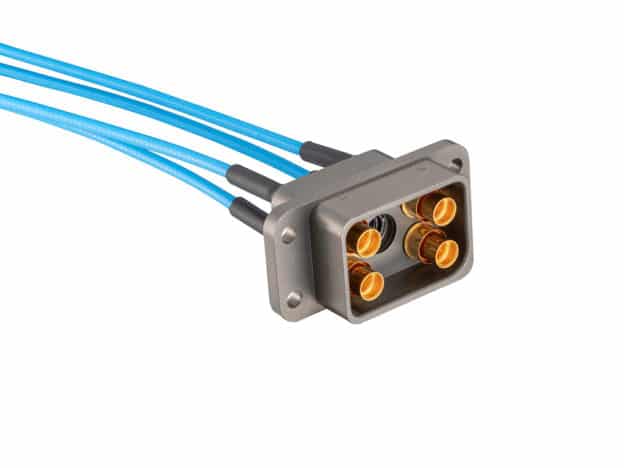
Multiport and mini-multiport connector solutions are ideal for high density avionics environments, where space is at a premium, accessibility for maintenance is limited and performance is mission-critical. These connectors consist of multiple coaxial contacts of the same interface integrated
into a single connector module or shell. There are numerous options for these types of connectors, including those with reduced size and weight that provide excellent electromagnetic shielding and phase stability with low VSWR and insertion loss to 20 GHz for multiport connectors and to 40
GHz for mini-multiport connectors. See Figure 1 and 2 for examples.
BUNDLED CABLE SOLUTIONS
Densification creates numerous challenges related to installation, torquing, ensuring proper weather sealing and more. In addition, an increasing number of technologies such as 5G small cells have limited space for equipment, so minimizing size and weight are also key goals.
With so many components in such a small space, maintenance can be challenging. If an interconnect fails, it can be hard to troubleshoot the exact one. Moreover, installation can be a time-consuming, labor-intensive and logistical nightmare. Hooking up the right cables, ports and torquing can be difficult when working with multiple connections. Proper weather sealing is also necessary; it is imperative to ensure that the seal is secure but not over-torqued.
A bundled cable solution can help create the perfect flexible antenna jumper for applications requiring multiple runs, such as 5G. A spiral configuration of multiple flexible and ultra-flexible jumper cables can be created under a common polyurethane outer jacket to promote easy installation and
improved operation. The individual coaxial cable runs are spun together in a way that easily flexes, essentially creating a bundle, which is then run through a large jacket extruder where a ripcord is placed.
This design enables four or five individual cables to be fed into the back of an industry standard MQ4/MQ5 bundled connector, incorporating multiple RF ports and significantly reducing the number of cables that have to be hooked up. MQ4/MQ5 bundled solutions also save a lot of labor and enable
a more rugged solution. They also make the assembly more weatherproof and UV resistant.
Using the four- or five-conductor solution eliminates the need to create individual weather seals, resulting in tremendous labor savings. Furthermore, it reduces the need to worry about coupling torque, which is critical because all it takes is an error on just one weather seal to create a point of
ingress for water that could create a multitude of problems and even potentially shut the system down. With a bundled solution, the connection between the male and female cluster connectors is sealed to IP-67, as are the connector bodies and the transition from the cluster connector to the bundled cable. Any potential system troubleshooting becomes much easier. Finally, the possibility of hooking up the wrong cable to the wrong port is eliminated. The solution is keyed, so the cables can only be hooked up a certain way—no torque wrenches, know-how or special technique required.
Bundled solutions are optimal for high density challenges as they permit installation in tight spaces; instead of connecting multiple threaded connectors, just one will do the job. They are faster and easier to install and maintain and provide one firm, reliable connection to support consistent high performance. Their design has many use cases, thus becoming particularly popular in applications
where cable installations and rising operating frequencies demand coaxial cables and connectors to deliver high signal integrity and reliability. An example of this type of solution is the TMQ4 and TMQ5 bundled cable assemblies from Times Microwave Systems® shown in Figure 3.
LOCKING MINIATURE BLIND MATES
A new generation of locking miniature blind mate connectors (TLMB) is specifically designed to overcome performance issues arising from typical SMP connectors’ susceptibility to electromagnetic interference (EMI) and electromagnetic compatibility (EMC) interference, liquid and salt ingress. Their rugged, sealed design is more durable to withstand harsh conditions and operate in severe environments. TLMB connectors retain the small form factor of the SMP for highly dense environments but add improved environmental, shielding and power capabilities, with a frequency
range from DC to 60 GHz.
While SMPs are still a valuable connector option for many designs, they pose problems as applications demand higher and higher frequencies. One of the critical issues is shielding and EMI.
Similarly, the SMP’s design reduces its ability to function without affecting other equipment in the same environment. The connector’s signal leakage issues often result in failed EMC tests. In short,
the SMP’s lack of proper electrical bonding and shielding exposes the conductor’s signal to external influence.
This signal leakage limits how closely the connectors can be placed in a single shell; without proper shielding, the contacts must be kept at a greater distance to prevent signal interference. With the improved shielding of a TLMB, more connectors and cables can be added in a much smaller footprint without interference issues.
Another major failure area in the SMP’s design makes them susceptible to ingress from saltwater, fuel and other contaminants. The lack of an environmental seal due to their mechanical openings makes SMPs prone to corrosion and failure. Another problem arises with using SMPs in high vibration applications, where their easy connect/ disconnect design makes them susceptible to unwanted de-mating in high vibration environments. TLMBs were created for high-reliability, high vibration environments such as military and aerospace. Areas where EMI may be an issue, such as
shipboard or aircraft, need an environmentally sealed and shielded connector.
The standard SMP may also disconnect in high vibration environments such as a carrier landing, weapons launch or any powerful weapons platform, making a locking miniature blind mate connector the ideal choice.
CABLE ASSEMBLIES FOR DENSELY PACKED IN-THE-BOX APPLICATIONS
Additionally, it may be optimal in high density applications to reduce the footprint required behind the connector to help install numerous cables into a very small space. Minimizing space between the cables and connectors is also necessary for the interconnect system to survive the high vibration and other harsh environmental conditions found in applications such as space and avionics.
New cable assemblies can be bent around tight corners and very closely behind the connector to minimize footprint, save space and simplify cable routing in tight spaces while offering low loss and optimized performance. Originally designed for space flight applications, this type of high performance assembly uses a compact, phase stable, highly flexible, micro becoming axial cable that can easily accommodate densely packed in-the-box applications. For example, Times Microwave System’s new InstaBend® high performance microwave assemblies provide a flexible
preassembled design for interconnects between RF circuit cards, modules and enclosure panels. InstaBend is ideal for in-the-box applications with space constraints, including space flight, thermal vacuum, microwave test and other commercial and military applications. The cable can be bent very closely behind the connector, minimizing footprint, saving space and simplifying cable routing (see Figure 4). This also eliminates the need to protect the back of the connector.
Additionally, InstaBend provides these benefits at a dramatically reduced lead time compared to competing solutions. The high performance microwave assemblies are available in standard configurations or customized to meet an application’s specific needs. This new product’s ability to bend from connector to connector provides maximum flexibility and minimum use of available volume in high density, inside-the-box applications.
SUMMARY
As advanced new mission-critical technologies are introduced, RF interconnect requirements are changing drastically, including the need for novel solutions to accommodate extremely restricted space constraints and rising operating frequencies. New innovations in high density RF interconnects are emerging to deliver high signal integrity and reliability in increasingly dense environments.
When selecting the right high density RF cables and connectors, it is best to work with a partner whose engineers can identify the application’s unique needs and design an optimized, easier to use solution—creating better electrical, mechanical and environmental performance. Look for a supplier
with a long history of building quality cable and connectors, along with the skill, processes, techniques and materials to bring custom solutions for specific application needs to life
RF Interconnects for 5G Infrastructure and Applications
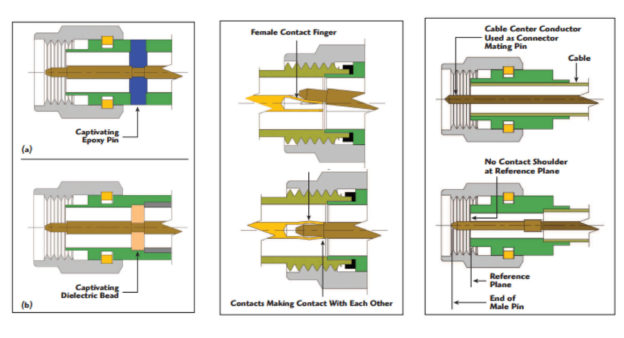
Pin Height
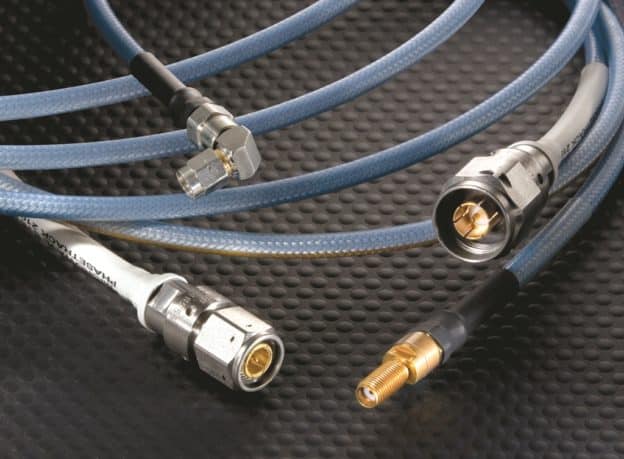
Phase Track Cable – TF4 Dielectric: The “Knee Replacement”
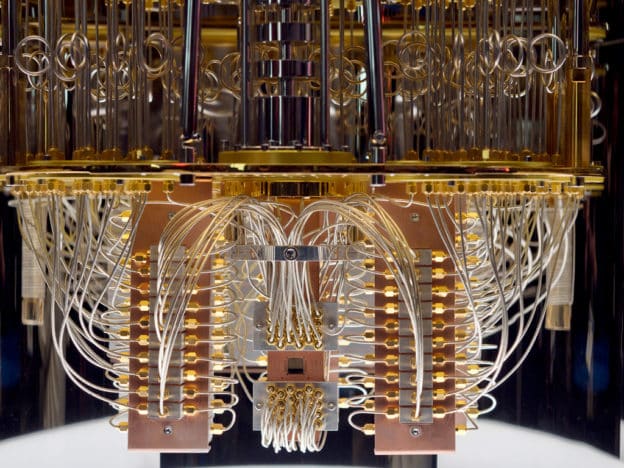
Optimizing Microwave Signals in Cryogenic Environments
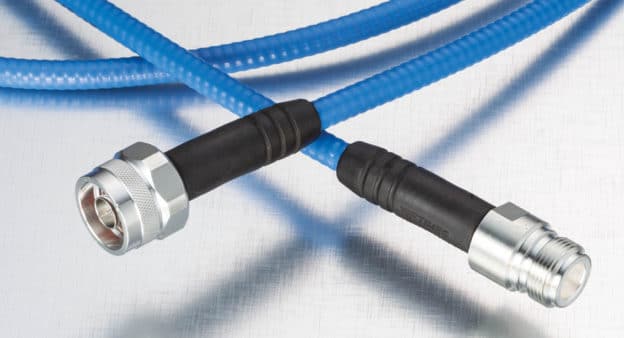
OPTIMIZING AN RF TRANSMISSION LINE
On Site Testing of Lightning Protection Devices
New Connector Field Installations Improve System Reliability
Connector Installation
New Connector Field Installations Improve System Reliability
By Kevin Moyher
Here is a short case history demonstrating a solution for reliable field-installed connectors use in high reliability wireless E911 systems
Across the country, CDMA, TDMA and GSM wireless communication sites are being upgraded to meet the requirements of the FCC’s Enhanced 911, or E911, mandate. Phase II of this ruling requires that network-based wireless location systems locate a wireless phone user to within 100 meters 67 percent of the time, and to within 300 meters 95 percent of the time. The quality and reliability of these systems is paramount; people’s lives may depend on it. Applications for this system are personal security, medical alerts, child tracking and accident response.
An Example of E911 Equipment
True Position is a leading supplier of the complex equipment that is integrated into cellular and PCS base stations to give them user location capability. True Position utilizes UTDOA (Uplink Time Difference of Arrival) technology to locate a subscriber’s cell phone. The LMU (Location Measurement Unit) is installed at each cell site. This equipment passively overlays the existing wireless network, sending critical data back to the operator’s Mobile Switching Centers where LCs (Location Calculators) perform the multipath mitigation algorithms. When a wireless phone user whose carrier employs True Position’s equipment dials 911 and activates the E911 network, the equipment in the area surrounding the caller is activated and begins to perform the complex calculations necessary to pinpoint the caller.
The reliability of this equipment is critical, and it has been optimized and ruggedized to perform with high reliability. However, there are only so many safeguards and safety measures that can be incorporated into the components themselves. The ultimate reliability of this system depends on the quality of the interconnecting cable runs. As shown in the photos of Figure 1, the E911 hardware has to be connected to each of the transmit and receive antenna runs, requiring multiple short interconnect cables. These cables are built from small core low-loss, flexible 50 ohm coaxial cable. True Position minimized some of the installation variables by using the QMA interface for these interconnecting runs. This interface can best be described as a high performance, quick connect SMA. The adoption of this interface eliminates the need for threading of small coupling nuts and the concern for achieving the proper mating torque.
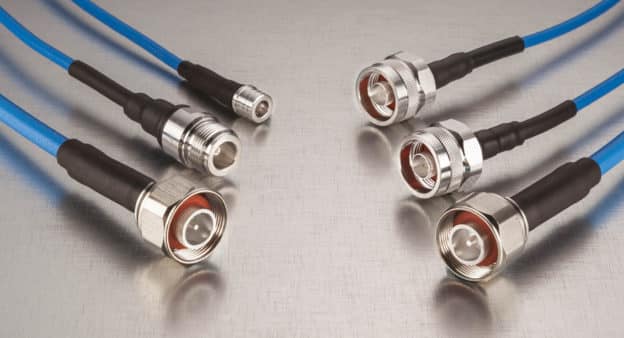
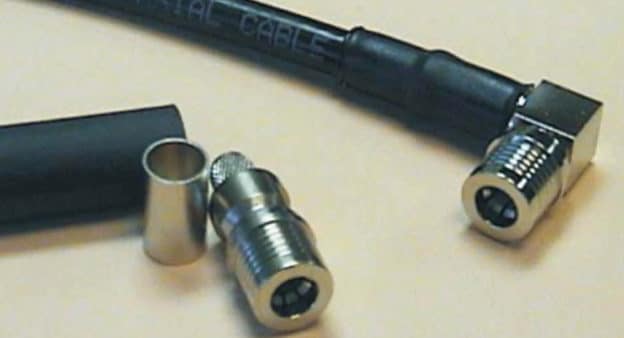
Times Microwave has contributed to high performance and reliability of these systems, starting with the basic requirements of high-quality cable and connectors with very good return loss. However, since the layout of every base station is different and the lengths of the interconnect cables vary accordingly, the cables must be cut and terminated in the field. This reality prompted the design of a series of EZ (spring finger center con- tact) connectors that interface with Times’ LMR®-240 cable (Figure 2). Though QMAs are the dominant interface in the system, SMA and Type N connectors are also widely used. These EZ connectors eliminate the need for soldering in the field and solve the issues of pin height and pin to core gap. These three variables are often the largest contributors to inconsistency in the performance of field terminated interconnect cables.
The right angle EZs employ a unique design. Many spring finger right angle connectors have a 90° swept center pin with a mitered outer conductor. This design offers ease of termination at the expense of return loss. Times has taken the typical soldered right angle design and improved upon it. The straight brass center pin has been replaced by a straight beryllium copper pin that is bifurcated at the back end with a lead-in for the cable center conductor. This configuration has the ability to fine tune the impedance across the right angle. Where typical EZ right angles have a return loss weakness over a properly designed right angle solder connector, this new design actually has an advantage: excess solder build-up is no longer an issue. Going a step further with this design, a stop is placed inside the connector so that the pin can not be over extended beyond the center pin.
Optimization of the field terminated cables goes beyond connector design and includes the development of two easy-to-use termination tools. The first of these is a “one-step” cable stripping tool (ST-240EZ). Many small coaxial cable prepping tools are generic tools which are completely adjustable. These tools are capable of being adjusted to work with different cables but can be a real minefield in terms of potential termination problems (i.e., nicked outer braids, nicked center conductor, crushed core, improper strip lengths, etc.). The ST- 240 is a completely customized tool. The cable slides into a cable slot until it hits a stop. The blade package, containing two hardened alloy blades, is then released onto the cable, the index finger is placed through the loop at the end of the tools handle and the tool is spun clockwise around the cable for three to four full revolutions. The tool is then grasped as close to the cable as possible and pulled away from the cable, exposing the center conductor and tinned copper round wire braid.
This tool assures that the cable is stripped to the proper dimensions every time. It preps the core square and clean without crushing it or rip- ping the outer conductor and it preps the center conductor clean without nicking. The most important function which the tool performs is to expose the braid without nicking it. This is a very important requirement in the termination process that often gets overlooked. The braids on these small core flexible cables are of a very small diameter and a slight miscalculation with the pressure applied to a knife or a slight mis-adjustment of a variable stripping tool could effectively wipe out half or more of the braid, resulting in poor connector retention. The introduction of these EZ connectors for LMR-240, and the simple tools to assist with their termination, has created a nearly foolproof choice for the field assembly of short low-loss interconnect cables.